
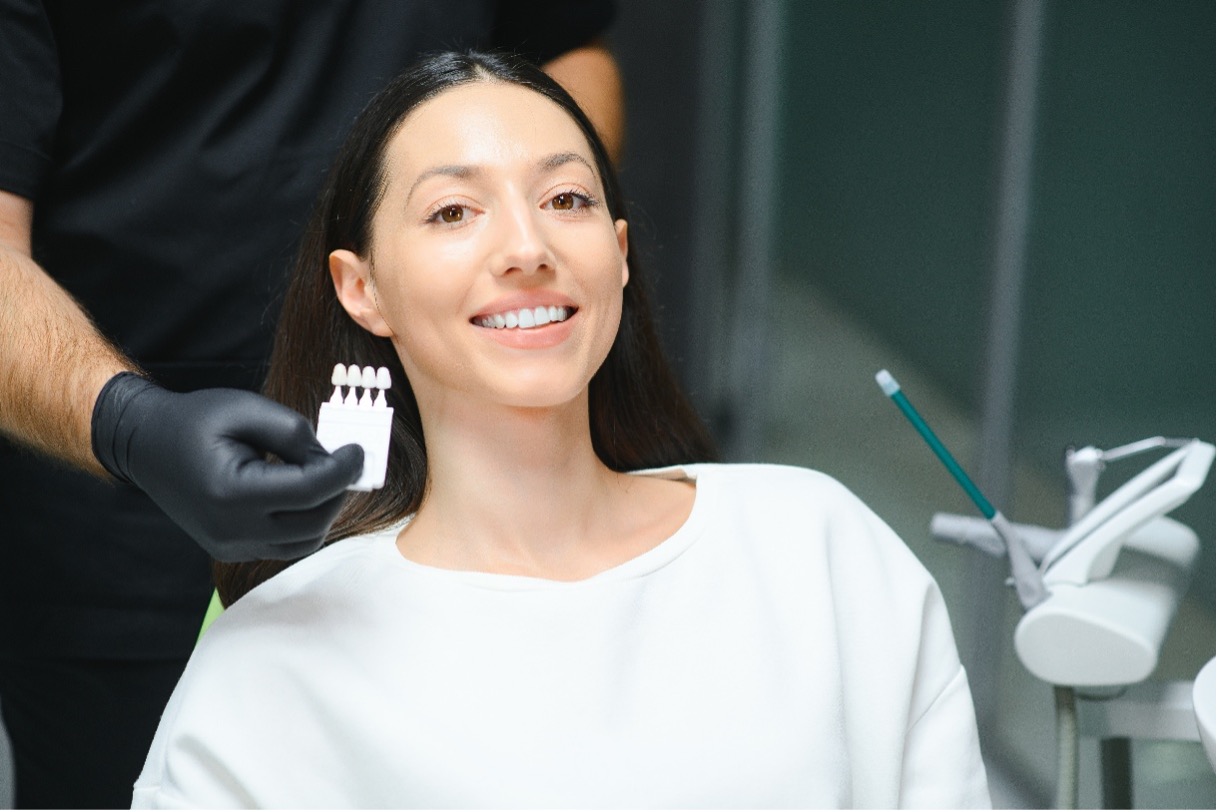
An Introduction to the Foundations of Anterior Aesthetics
Michael C. Fling, DDS
Cosmetic dentistry, particularly when addressing the anterior teeth, combines scientific principles with an artistic eye. Even experienced dentists (me included) recognize that their past work can sometimes fall short, emphasizing the continuous pursuit of improvement. This journey towards mastery involves not only honing skills but also leveraging the insights of experts and the support of material providers. At The Pankey Institute, the journey begins with the Essentials Series of courses, leading to the Focus and Mastery courses.
The Role of Collaboration and Key Influencers in Cosmetic Dentistry
The commitment to advancing dental knowledge is deeply embedded in the collaborative spirit of The Pankey Institute’s faculty. This dedication extends beyond internal discussions to include valuable partnerships that enhance both dental education and clinical practice. Collaborations with companies like DMG® (creator of the LuxaCrown and Luxatemp Ultra materials) are crucial for accessing advanced materials and information in continuing dental education courses at The Pankey Institute. Beyond Institute partnerships, the field benefits immensely from the contributions of leading clinicians in cosmetic dentistry. Dr. Bill Robbins and Dr. Jeff Rouse, for instance, have developed a foundational approach to anterior tooth aesthetics that is widely applied in practice and teaching.
Understanding Facial Proportions: The Foundation of Anterior Aesthetics
A key aspect of Bill Robbins’s and Jeff Rouse’s teaching involves analyzing facial proportions to guide aesthetic dental work. This begins with measuring the face in a relaxed, “repose” position:
- Glabella to Nose vs. Nose to Chin: The distance from the glabella (the smooth part of the forehead between the eyebrows) to the bottom of the nose should be approximately equal to the distance from the bottom of the nose to the chin. This 1:1 ratio is a fundamental guide. Digital calipers, affordable and accessible, can be used for these precise measurements.
- Lower Face Proportions: Further refinement involves dividing the lower half of the face. The distance from the base of the nose to the upper lip should be about one-third, and the distance from the upper lip to the bottom of the chin should be about two-thirds.
The Dynamic Nature of the Lips and Anterior Teeth
The appearance of the anterior teeth is also heavily influenced by the lips, which change with age and expression:
- Upper Lip Length: In women, the upper lip typically measures 20-22 millimeters, while in men, it’s slightly longer at 22-24 millimeters.
- Aging and Tooth Display: As individuals age, the face tends to grow “out and down,” leading to less and less of the upper front teeth being visible. This natural change can make a smile appear less youthful. By adjusting the size and position of the teeth to show more of the upper front teeth, dentists can create a more youthful aesthetic.
- Lip Mobility: The movement of the upper lip from a relaxed “repose” position to a full smile is also critical. An ideal lip movement is typically between six to eight millimeters.
Principles of Anterior Tooth Placement and Proportions
Beyond facial and lip dynamics, the precise placement and dimensions of the anterior teeth themselves are important, and there are ideal rules to follow:
- Incisal Edge Position: The biting edge (incisal edge) of the upper front teeth should be “cradled” by and follow the contour of the lower lip. It’s also worth noting that men generally show slightly less tooth than women.
- Gingival Margin Height: The height of the gum line (gingival margin) from canine to canine should be consistent, with the central incisors typically on the same line and the laterals very close, perhaps slightly lower. This consistency is vital for an aesthetically pleasing smile.
- Tooth Ratios (Width and Length): Specific mathematical ratios guide the ideal dimensions of the upper front teeth:
- Lateral Incisor Width: The width of the lateral incisor should be approximately 75% of the width of the central incisor.
- Length to Width Ratio: For a central incisor, the length should be about 25% longer than its width. These ratios are fundamental for a harmonious and balanced smile.
Note: While not a definitive “secret formula” for beauty, the golden proportion remains a powerful and influential concept in the study of aesthetics. The emphasis on precise measurements and harmonious ratios in dental aesthetics aligns with the principles of the Golden Proportion (approximately 1.618:1), a mathematical ratio often found in nature, architecture, and art. The ideal width relationship between the central and lateral incisors, and the ideal length-to-width ratio of the central incisor, are practical applications of these aesthetic ideals.
The Global Restorative Sequence: A Systematic Approach
Effective aesthetic dentistry often follows a systematic process, such as the “global restorative sequence.” This sequence widely taught by Robbins and Rouse integrates diagnostic and clinical steps:
- Global Diagnosis: This initial phase involves a comprehensive assessment, considering not just the teeth but also the joints and airway, addressing any issues as needed.
- Determining Upper Incisal Edge Position: This is a critical step, as the position of the upper incisal edge dictates much of the subsequent treatment.
- Leveling Lower Incisal Edge and Coupling: The lower incisal edge is then aligned with the upper, ensuring proper “coupling” (how the upper and lower teeth meet).
- Assessing Vertical Dimension: The vertical dimension (the distance between the upper and lower jaws when biting) is evaluated to determine if adjustments are necessary.
- Leveling Occlusal Planes: The lower biting surface (occlusal plane) is leveled, and then the upper occlusal plane is restored to match.
This methodical approach, particularly understanding tooth proportions in the lab, helps address the challenge of achieving the ideal tooth length (e.g., if a central incisor needs to be 10.5 mm long based on its 8 mm width, the decision needs to be made whether to bring the biting edge down, raise the gum line, or a combination).
The Importance of Diagnostic Wax-Ups and Practical Application
Creating diagnostic wax-ups in the lab is an integral part of this process. While many dentists may find it time-consuming, it’s an invaluable tool for visualizing and planning the final restoration. This emphasis on precise planning stems from the understanding that to “wax like you draw,” one must first have a clear mental image of the desired tooth shape and form.
The ability to draw the upper anterior teeth is beneficial because it forces a precise understanding of their ideal outline, perimeter, and contours. If you’re going to make a tooth more aesthetic, you need to understand the rules and proportions guiding its ideal form. Therefore, at Pankey, we encourage dentists to practice drawing these teeth, starting with the outer shape and then adding the nuances of contours and anatomy.
Without this ingrained understanding of the “concepts” of ideal tooth morphology and its specific ratios (like the 75% lateral incisor width or the 25% longer central incisor length), replicating aesthetic principles in wax (or any restorative material) becomes significantly more challenging. It’s not about artistic talent but about solidifying foundational aesthetic knowledge.
Final Thoughts: The Art of the Ideal Smile
Aesthetic dentistry, at its core, is a deeply multifaceted discipline. It demands not only a rigorous scientific understanding of anatomy, physiology, and materials but also a keen artistic eye capable of envisioning beauty. The visualizing phase, whether through drawing, diagnostic wax-ups, or digital smile design, is indispensable. It’s in this phase that scientific measurements meet artistic considerations to plan the practical application of restorative techniques.
By mastering the principles of facial and tooth proportions, understanding the dynamic interplay of lips and teeth, and adhering to systematic restorative sequences, dentists can move beyond simply fixing teeth to truly creating smiles that appear harmonious, natural, and youthful.
I hope this article will serve as a foundational reference for those seeking to pursue excellence in anterior aesthetics. Starting with the Institute’s Essentials Series, the journey of continuous improvement is what truly defines mastery in this field.
Ready for more inspiration to master the nuances of smile aesthetics? View my Pankey webinar The Upper Anterior Segment Perception vs. Reality, where I present cases from my practice that illustrate artistry in dentistry.


Related Course

Proactive Caries Care: Harnessing AI Diagnostics and Biomimetic Repair for Superior Patient Outcomes
DATE: January 16 2026 @ 2:00 pm - January 16 2026 @ 3:15 pmLocation: Online
CE HOURS: 1.25
Proactive Caries Care: Harnessing AI Diagnostics and Biomimetic Repair for Superior Patient Outcomes Course Description: This course explores how artificial intelligence, predictive diagnostics, and guided hydroxyapatite generation are redefining early…
Learn More>
About Author
