Revolutionizing Patient Communication and Restorative Outcomes with Facial Scanners
Mark Kleive, DDS
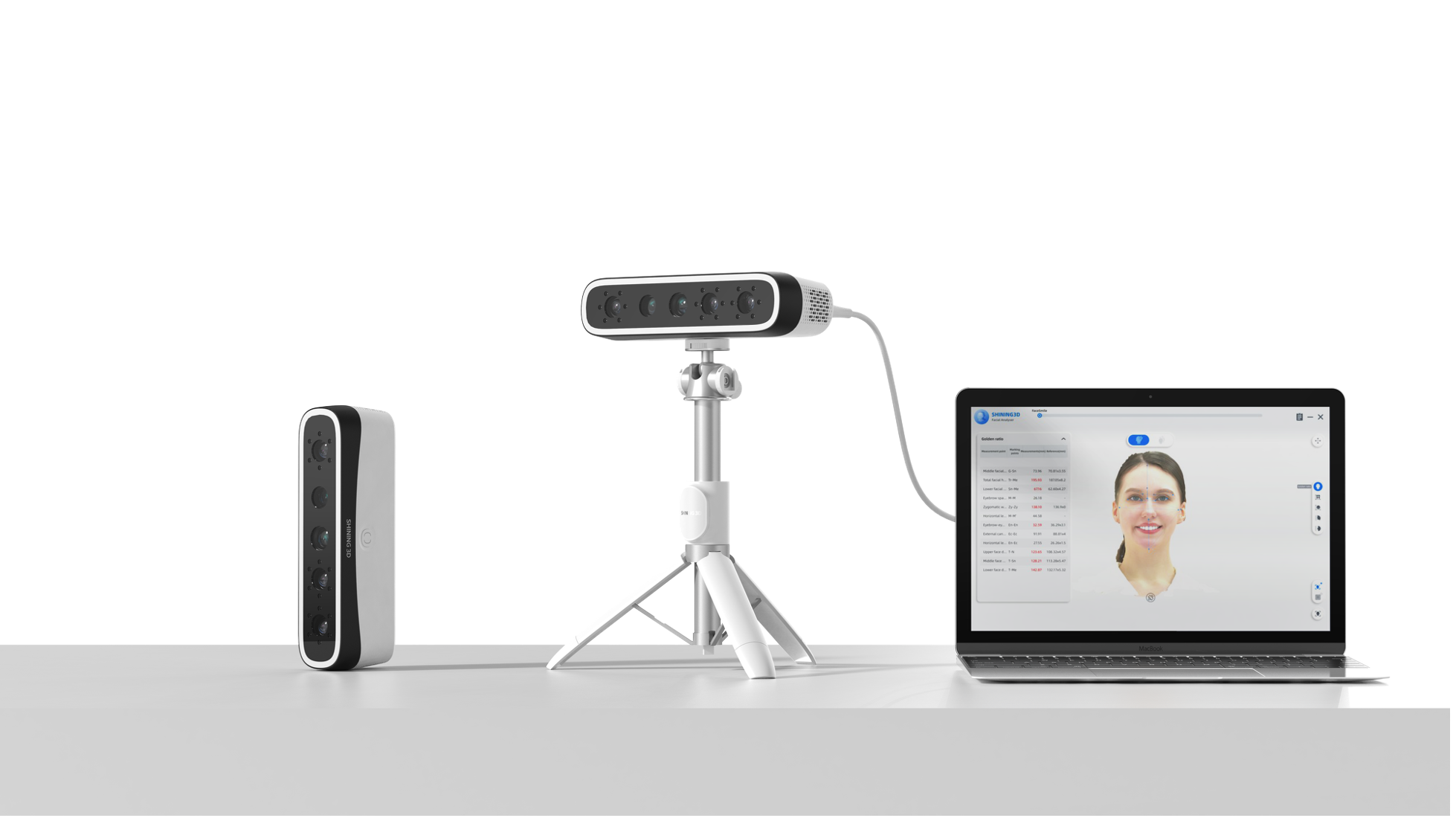
In our dental practice, we’re constantly looking for ways to leverage cutting-edge technology to improve patient care and communication. One of the most exciting recent additions to our digital workflow is the Shining3D Metismile facial scanner. This technology, combined with intraoral scanners and CBCT, is truly transforming how we approach 3D lab design and restorative dentistry.
The Power of 3D Data Acquisition
For years, we’ve integrated intraoral scanners and CBCT into our digital process. Now, adding facial scanners to our data acquisition allows us to create a comprehensive 3D representation of the patient. In our office, we use software like Exocad for design before moving to the manufacturing phase with our 3D milling and printing capabilities.
So, what exactly do facial scanners bring to the table? It’s a powerful tool for gathering detailed information about a patient’s face, which is then seamlessly integrated into our design software. This comprehensive data significantly enhances our ability to communicate with patients about their current situation and, more importantly, the incredible possibilities for their smile.
A Seamless Workflow and Enhanced Communication
We’ve been using the Shining 3D MetiSmile facial scanner system, which we appreciate for its portability and compact size. Imagine this: in about 10 seconds, we can capture a highly accurate facial scan (down to 50 microns) of a patient, whether they’re in a consultation room or a treatment room.
The real magic happens when we merge this facial scan with an intraoral scan. Suddenly, we have a complete 3D view of the patient’s face, their teeth, and the intricate relationship between them. This holistic perspective is invaluable for patient education. We can show them, in vivid 3D, their current smile and then demonstrate potential changes with remarkable clarity.
Case in Point: Visualizing Transformative Results
Let me share an example. We recently had a patient who, after 15 years, was no longer happy with the appearance of her dentistry. What stood out immediately was her beautiful incisal display at rest – a great starting point! However, upon closer examination of her upper arch, we noticed subtle discrepancies. Most notably, her teeth had a “squatty” appearance – wider than they were long, especially when compared to natural tooth proportions.
For years, I’ve used templates to communicate these concepts. In this case, one of our preferred restorative options involved intruding her teeth to align with a newly designed gingival curve, then adding length. This approach simplifies the restorative process significantly for us.
To help her visualize the potential outcome, we used Pixelmator Pro for Mac software. In just a few minutes, we could make quick alterations by dragging the mouse, providing a rough estimate of the “after” picture. While other programs like Photoshop could do this, Pixelmator offers a quick and effective solution for our team.
From 2D to 3D
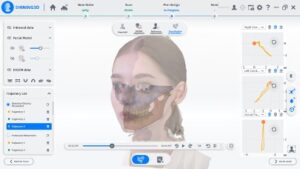
In the past, we could overlay a 2D picture with a design in Exocad, but it lacked the dynamic, three-dimensional perspective. Now, by overlaying our digital design with the facial scan, we can actually move the patient’s face around in 3D, allowing for real-time discussions about shape, length, and texture. This interactive experience empowers patients to truly understand and engage in the design process.
The facial scan is more than just a visualization tool; it integrates seamlessly with other digital workflows, like our digital articulator. We can create STL files of our digital designs, which can then be 3D printed for models, cutback guides, or even temporary restorations – we’re doing a lot of 3D printing for temporaries these days.
A Valuable Communication Tool for Restorative Dentistry
The MetiSmile is proving to be an incredibly valuable communication tool in our practice. It makes it significantly easier for patients to grasp what’s possible with restorative dentistry and helps them envision the potential outcomes. It bridges the gap between our clinical expertise and their understanding, fostering a deeper connection and shared vision for their smile.
To learn more about integrating digital workflows into your dental practice, join Dr. John Cranham here at Pankey for the upcoming hands-on course about Digital Mastery. Achieve functional and esthetic excellence in your restorations with a fully digital workflow that saves valuable chair time and increases predictability of the outcomes.


Related Course

Proactive Caries Care: Harnessing AI Diagnostics and Biomimetic Repair for Superior Patient Outcomes
DATE: January 16 2026 @ 2:00 pm - January 16 2026 @ 3:15 pmLocation: Online
CE HOURS: 1.25
Proactive Caries Care: Harnessing AI Diagnostics and Biomimetic Repair for Superior Patient Outcomes Course Description: This course explores how artificial intelligence, predictive diagnostics, and guided hydroxyapatite generation are redefining early…
Learn More>
About Author

Dr. Mark Kleive earned his D.D.S. degree with distinction from the University of Minnesota School of Dentistry in 1997. Mark has had experience as an associate in a multi-clinic setting and as an owner of 2 different fee-for-service practices. For the last 6 years Mark has practiced in a beautiful area of the country – Asheville, North Carolina, where he lives with his wife Nicki and twin daughters Meighan and Emily. Mark has been passionate about advanced education since graduation. Mark is a Visiting Faculty member with The Pankey Institute and a 2015 inductee into the American College of Dentistry. He leads numerous small group study clubs, lectures nationally and offers his own small group programs. During the last 19 years of practice, Dr. Kleive has made a reputation for himself as a caring, comprehensive oral healthcare provider.