
My Workflow for Creating a Digital Bite Splint
Michelle Lee, DMD
My workflow is designed to combine the diagnostic power of the anterior deprogrammer with the precision of digital scanning in fabricating a Bite Splint. This approach minimizes chair time for adjustments and maximizes the therapeutic effect of the final appliance.
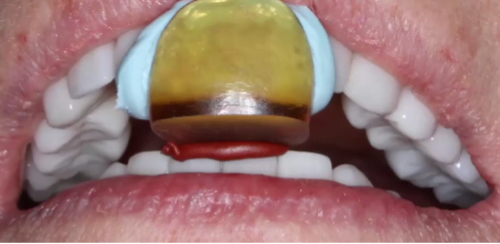
Step 1—Scan and Seat: I start by taking upper and lower intraoral scans. I then place an anterior deprogrammer and manually guide the patient’s jaw into centric relation (CR). This little jig is the secret sauce to a “craniomandibular reset” and “deprograms” the muscles. Tapping motion of the mandible against the deprogrammer is critical in this step. Open, tap, open, tap, and tapping to the right and left allows the mandible to go beyond its sometimes-learned muscle inhibitions. Protrusive and retrusive slides seat the condyles even further. The retrusive path and the intersection of the bimanual guidance allow for an accurate position of “seated condylar position.” To secure this position and free my hands, I use a small amount of compound wax to index the anterior deprogrammer to the teeth. This allows the patient’s jaw to be in a relaxed, deprogrammed state while I prepare for the scan.
Step2—Lock it In: To ensure the jaw remains perfectly stable during the intraoral scan, I add bite registration material to both sides of the occlusion to lock in the position. This simple yet critical step prevents any micro-shifting that could compromise the accuracy of the record. My lab technician and I have found this crucial for preventing the “bite’s a little off” phone call.
Step 3—Protrusive Record: I also take a record of the patient’s protrusive movement, either with an end-to-end bite or a simple photograph. This provides the lab with the condylar inclination, which is essential for designing a splint with the correct posterior disclusion and smooth anterior guidance. Without this information, the splint could be too thick or have an incorrect ramp angle, leading to unnecessary adjustments and discomfort.
Beyond Digital Bite Splints: Extending the Principle for Other Digital Treatments
The principles of deprogramming and establishing a stable centric relation extend beyond just fabricating digital bite splints. They are invaluable for ensuring the success of other digital treatments.
Aligner Therapy: For patients undergoing aligner therapy who experience clenching, we can have a small anterior ramp incorporated into the aligner design. This instantly discludes the posterior teeth, providing relief from muscle tension.
Essex Retainers: A patient with an Essex retainer who complains of jaw pain can benefit from a diagnostic test where we can add acrylic to the back of the front teeth on the retainer. This creates an anterior deprogrammer, demonstrating the therapeutic effect before a full appliance is even considered.
By using these techniques, we are not just making a digital bite splint; we are providing our patients with a path to a more stable, comfortable, and healthy joint. It’s an honor to apply these principles and see the life-changing results.
Recommended Pankey Institute Faculty Webinar: Anterior Deprogrammers: The Why, What, and How? – Restorative Nation


Related Course

Smile Design: The 7 Deadly Sins
DATE: March 20 2026 @ 8:00 am - March 21 2026 @ 3:00 pmLocation: The Pankey Institute
CE HOURS: 16
Regular Tuition: $ 2295
Single Occupancy with Ensuite Private Bath (per night): $ 355
Designing Smiles is What We Do! From direct to indirect restorative – to clear aligners – to interdisciplinary care – designing smiles is what we do. Those who understand and…
Learn More>
About Author

Dr. Michelle Lee is very proud to provide all aspects of general, family, and cosmetic dentistry to the Fleetwood and Berks county areas. Dr. Lee is a 2004 graduate of the University of Pennsylvania School of Dental Medicine and completed a one-year General Practice Residency program at Abington Memorial Hospital. Dr. Lee continues to keep herself abreast of dental advancements and takes hundreds and hundreds of hours of advanced dental education from the Pankey Institute and other courses for advanced dental training. She also maintains a faculty and advisor position at the Pankey Institute. Professionally, Dr. Lee is member of the Academy of General Dentistry, American Dental Association, Pennsylvania Dental Association, and serves on a committee of the American Equilibration Society. She also volunteers to treat pediatric patients through her local dental society.